Remove eligible intimate images from Bing search results
We help document the affected URLs, choose the relevant Microsoft reporting path, and track the request without asking you to publish private material. Microsoft—not our service—decides whether a result qualifies for removal.
First identify which layer is still visible
A Bing thumbnail can remain after a host removes the underlying page. The reverse is also possible: Bing may delist a result while the source stays online. A useful plan checks both.
- Capture the Bing result URL and the source URL separately
- Confirm whether the source still loads before choosing a form
- Use an NCII, copyright, or outdated-cache path only when it fits
- Track each URL because one decision may not cover every copy
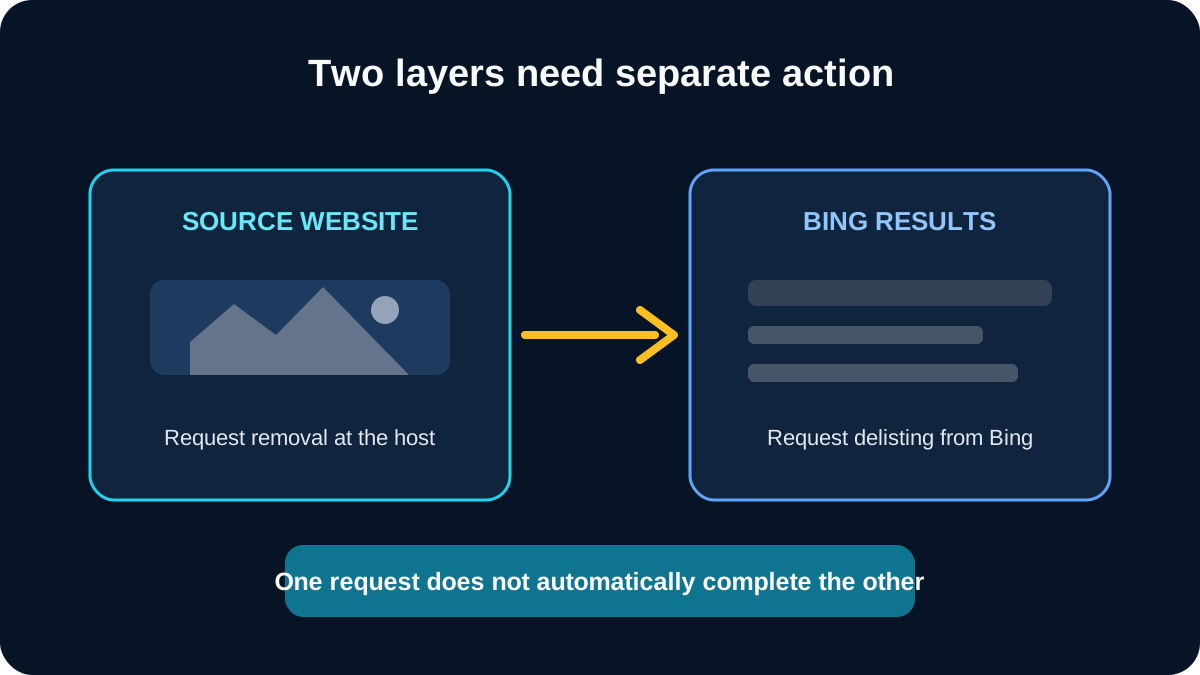
What this service can—and cannot—do
We can support the request
- Organize affected result and source URLs
- Distinguish private-image, copyright, and stale-cache routes
- Prepare truthful, minimally necessary submission details
- Record responses and identify unresolved copies
We do not control Bing
- No guaranteed decision or review time
- No claim that delisting erases the source
- No legal advice or invented eligibility
- No need for account passwords or public disclosure
Choose the reporting path that matches the facts
Non-consensual intimate imagery
Microsoft says Bing may remove links to real or synthetic intimate images shared without consent after verification. This path is about the person depicted and consent, not simply whether a result is embarrassing.
Copyrighted creator content
A rights holder or authorized agent may use Microsoft’s infringement channel for qualifying copied work. Copyright ownership and authorization must be stated accurately.
Outdated result or cache
When the host already removed or materially changed the page, Bing’s Content Removal Tool may be the relevant route. It does not substitute for a privacy report while the source still displays the material.
Primary references: Microsoft’s Bing removal policy and Digital Safety Content Report.